Electrical Technology
Department of TechnicalsIn an electrical mechanic technology vocational diploma programme, candidates learn through classes and hands-on training in institute labs. These vocational programs take two semesters to complete and can be specialized in multiple specific career fields, such as electrician, and construction.
-min.jpg)
A diploma programme is just not sufficient for licensing as an electrician, which every state requires. Most electricians get trained through apprenticeship programmes lasting a few years. A vocational diploma is not required to enter an apprenticeship programme
Key Feature
- Vocational courses in Electrical Technology Skills are the study about maintenance of Electrical equipment used and set up by the industries.
- With the help of this vocational course, the students will get the working knowledge of Installation as well as Commissioning of Industrial equipment like Servo Voltage Stabiliser, UPS, Industrial Battery Charger, etc.
- Students will also acquire knowledge of component identification and safety, the study of the layout of wirings, and precautionary measures while handling high voltage equipment, energy conservation, audit, etc.
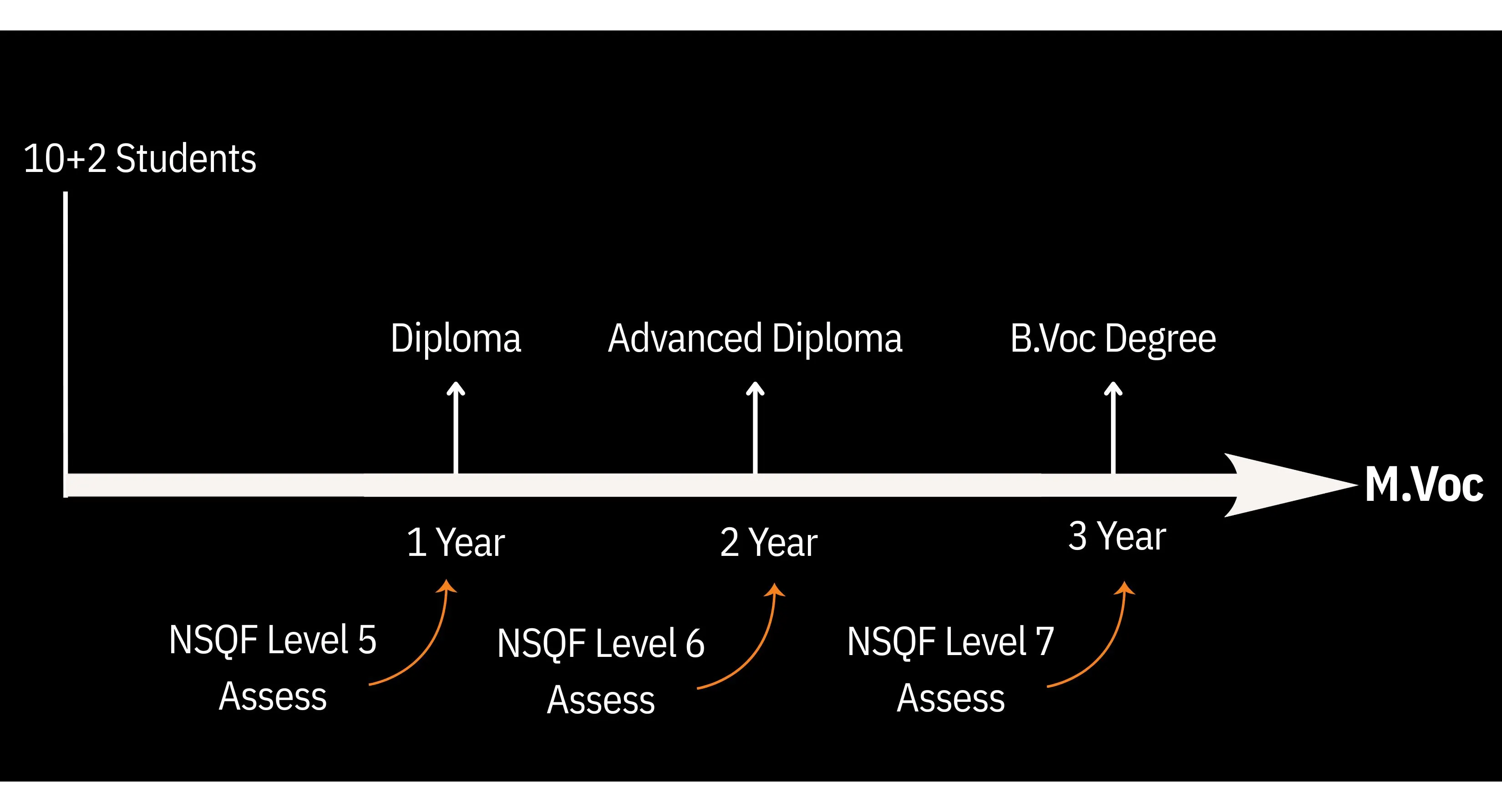
Course Progression: Electrical Technology
Diploma (First Year – Semester 1 & 2)
A practical foundation in electrical systems, wiring, safety, and essential engineering skills.
- Begin with core subjects like Basic Electrical Concept, Electrical Appliances-I, and Electrical Material & Wiring-I, building the fundamentals of electrical circuits and wiring techniques.
- Learn critical workplace safety through Fire and Safety Technology, an essential component of modern vocational programs.
- Strengthen communication and computing skills with Functional English and Computing Skills-I.
- Move deeper into electrical systems with Energy Conservation & Audit, Electrical Power Generation, and Basic Electronic Concepts.
- Advance your wiring and appliance knowledge through Electrical Appliances-II and Electrical Material & Wiring-II.
- Includes multiple hands-on practical sessions, making it ideal for learners seeking electrical diploma, electrician courses, or technology training in real environments.
Advanced Diploma (Second Year – Semester 3 & 4)
Transition into electrical machines, power distribution, and protection systems.
- Study key measurement tools through Electrical Measurement & Instruments.
- Build machine-level expertise with DC Machines, Transformers, and later AC Machines in Semester 4.
- Understand grid-level systems through Electrical Transmission & Distribution.
- Learn workplace readiness with Communication Skills, Basics of Accounting, and later Financial Literacy.
- Advance to industry requirements with Network Analysis, Switchgear & Protection, and Industrial Management & Safety.
- Enhanced computing through Computing Skills-II, preparing students for future technical courses and advanced electrical programs.
B.Voc Degree (Third Year – Semester 5 & 6)
High-level specialization, industrial applications, and real-time power system training.
- Explore large-scale power operations through Thermal Power Engineering.
- Build digital expertise with Computer-Aided Power System Studies and Digital Signal Processing.
- Learn essential field-level skills through Testing & Maintenance, widely used in power plants and industrial units.
- Strengthen workplace readiness with Digital Literacy and Professional Ethics.
- Final semester expands into advanced systems like Electrical Traction & Utilization, vital for railways and heavy industries.
- Gain modern technical experience with MATLAB, Embedded Systems, and core Entrepreneurship training.
- Complete a major practical and project-based semester — perfect preparation for entering industry or pursuing higher technology courses.
M.Voc Degree (Postgraduate Level – 2 Years)
Advanced power systems, renewable technologies, automation, and research excellence.
Year 1 – Advanced Electrical Systems & Power Electronics
- Learn system-level modeling through Power System Modeling and understand high-level components via Advanced Power Electronics.
- Gain control and automation expertise with Modern Control Systems.
- Explore future-focused topics like Renewable Energy Systems, vital for modern infrastructure and construction technology.
- Study dynamic operations with Electrical Transients in Power Systems.
- Boost communication and workplace effectiveness through Communication & Soft Skills.
- Advance industrial competencies with AC/DC Drives, Advanced Power System Protection, and Embedded Systems.
- Explore futuristic mobility with Electric & Hybrid Vehicles.
- Learn industrial optimization through Energy Management & Auditing.
- Deepen analytical skills with Digital Signal Processing, Instrumentation, and Energy System Management.
- Move into advanced planning through Power System Planning, Neural Networks & Fuzzy Systems, and Smart Grid technology.
- Final year includes Research Methodology, Modeling & Simulation, Robotics, and a complete Dissertation, preparing you for leadership in electrical engineering and high-end vocational training programs.