Optometry Technology
Departmant of ParamedicalThis course is designed especially to teach students the various concepts of eye health, diseases, diagnosis, and treatment of Human eyes. The course shelters topics such as patient management, psychology, and optometric retail management.
-min.jpg)
The basic eligibility criteria for pursuing an Optometry course program is 10+2 schooling or equivalent examination in Science stream with Physics, Chemistry, Biology, and/or Mathematics from a recognized board.
Admissions to Optometry courses are either merit or entrance based. The merit list is prepared by colleges/ universities. Some of the accepted entrance exams are AIIMS Entrance Exams, AMU EE, BFUHS EE, BU EE, Etc.
Key Feature
- B.Voc in Optometry is beneficial for students who have a sound foundation in the chemical, physical, mathematical and biological sciences, and have a good understanding and knowledge of human biology, understand the passage of light through lenses and optical systems (including the eye) and be able to measure and predict the nature and quality of optical images
- B.Voc in Optometry gives a piece of in-depth knowledge on the performance and function of the human visual system.
- The course makes them know about the diseases and dysfunctions of the eye and visual system and know their genesis, natural course, treatment, and prognosis
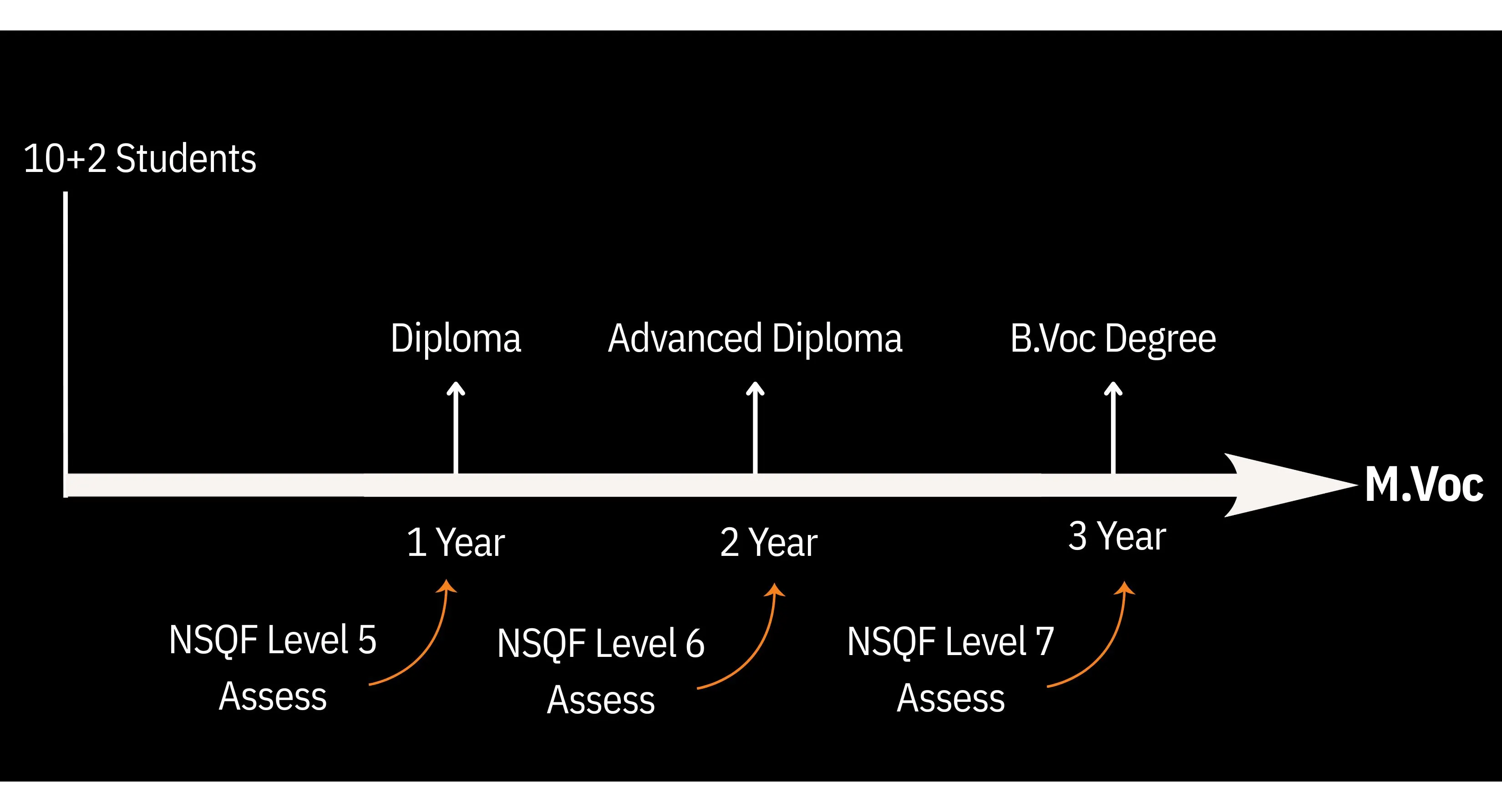
Course Progression: Optometry Technology
A clear journey from foundational eye sciences to advanced clinical optometry, diagnostic technology & vision care excellence.
Year 1: Build Your Foundation in Eye & Vision Science
- Learn the basics of Anatomy & Physiology, Biochemistry, and Para-Clinical Sciences.
- Understand Geometrical Optics, the science behind lenses, vision correction & image formation.
- Get hands-on with Computing Skills—essential for modern advanced digital eye exams & clinic tech.
- Begin practical training with optometry instruments, lab skills & basic diagnostic procedures.
- Develop communication & functional English useful for a professional optometrist tech career.
Year 2: Step Into Clinical Optometry & Diagnostic Technology
- Explore Ocular Anatomy, Physical Optics, and Optometric Optics, building strong visual science skills.
- Train in Medical Ethics & Patient Care, crucial in eye clinics & technology university labs.
- Move into Optometric Instruments—including early exposure to OCT in optometry, slit lamps & retinoscopes.
- Study General & Ocular Pharmacology, Visual Optics & advanced dispensing skills.
- Practical sessions intensify with real-world eye tech optometry set-ups and hands-on assessments.
Year 3: Master Clinical Skills & Modern Optometry Technology
- Dive into Systemic & Ocular Diseases, clinical examination techniques & advanced visual optics.
- Learn specialty care: Contact Lenses, Low Vision Care, Geriatric & Pediatric Optometry, Binocular Vision.
- Use modern diagnostic systems:
- Retinal scan optometrist tools
- Latest eye exam technology
- OCT machine optometry
- Advanced digital eye exam equipment
- Build real-time skills for roles in optometry clinics, hospitals, and vision-care diagnostic centers.
- Finish with an industry-aligned project work that integrates clinical, optical & diagnostic technologies.
M.Voc Progression: Advanced Clinical Excellence & Technology Leadership
Semester I: Advanced Optometry Techniques & Clinical Instrumentation
- Master Ophthalmic & Optical Instrumentation, contact lens technology & rehabilitation.
- Deepen understanding of Ocular Anatomy & Physiology for high-level diagnostics.
- Enhance communication for roles in optometry university, hospitals & vision centers.
Semester II: Specializations & Public Health Optometry
- Study advanced Ocular Pharmacology, Pediatric Optometry, and Occupational Optometry.
- Learn clinical business management—important for running modern eye clinics.
- Understand Ocular Motility & Binocular Vision through hands-on training.
Semester III: Applied Clinical Expertise & Diagnostic Mastery
- Gain exposure to Eye Banking, Clinical Optometry, and Ocular Diseases.
- Train on high-end diagnostic tools used in retinal scan optometrist practices.
- Apply Optometric Investigation & Neuro-Optometry to real clinical cases.
Semester IV: Leadership, Research & Vision Therapy
- Learn Vision Therapy, Orthoptics, and community eye-care practices.
- Build research skills through Research Methodology & a dissertation.
- Develop clinical psychology awareness to enhance patient-centered practice.