Growth of aviation sector in India
India's aviation sector is one of the fastest-growing in the world, driven by rising middle-class incomes, regional connectivity schemes, and massive infrastructure expansion. From new airports to record passenger traffic, this growth is creating strong demand for skilled professionals trained through every type of aviation course, including aviation management, airport management course, and commercial pilot training. For a skills-focused institution like Sikkim Alpine University, this makes aviation a high-potential domain for career-oriented vocational learners.
Current Landscape of Aviation in India
India is now the world's third-largest domestic aviation market, with passenger traffic crossing pre‑COVID levels and expected to keep rising as more people fly for work, tourism, and education. Government initiatives like UDAN (Ude Desh ka Aam Naagrik) have boosted regional connectivity by making air travel accessible to smaller cities and towns. This expansion requires trained manpower across operations, engineering, hospitality, and management—precisely the areas served by modern aviation course offerings.

Leading aviation colleges and universities now design programs aligned with DGCA, industry standards, and airport operators' skill requirements. For students, this means better-aligned pilot training programs, flight attendant course options, and aircraft mechanic training pathways that directly link to real jobs.
Drivers of Growth in the Aviation Sector
Several key factors are accelerating the growth of aviation in India:
- Rising disposable income and a growing middle class.
- Rapid urbanization and demand for faster travel between metros and emerging cities.
- Policy support for airport privatization, MRO (Maintenance, Repair and Overhaul), and regional routes.
- Expansion of low-cost carriers, increasing affordability.

As airlines add more aircraft, they need more pilots, cabin crew, ground staff, and maintenance engineers, creating strong demand for commercial pilot course, aviation management courses, and aircraft maintenance engineering programs. This demand is not limited to metros; Tier‑2 and Tier‑3 cities near new airports are also seeing rising need for trained professionals.
Emerging Career Opportunities in Aviation
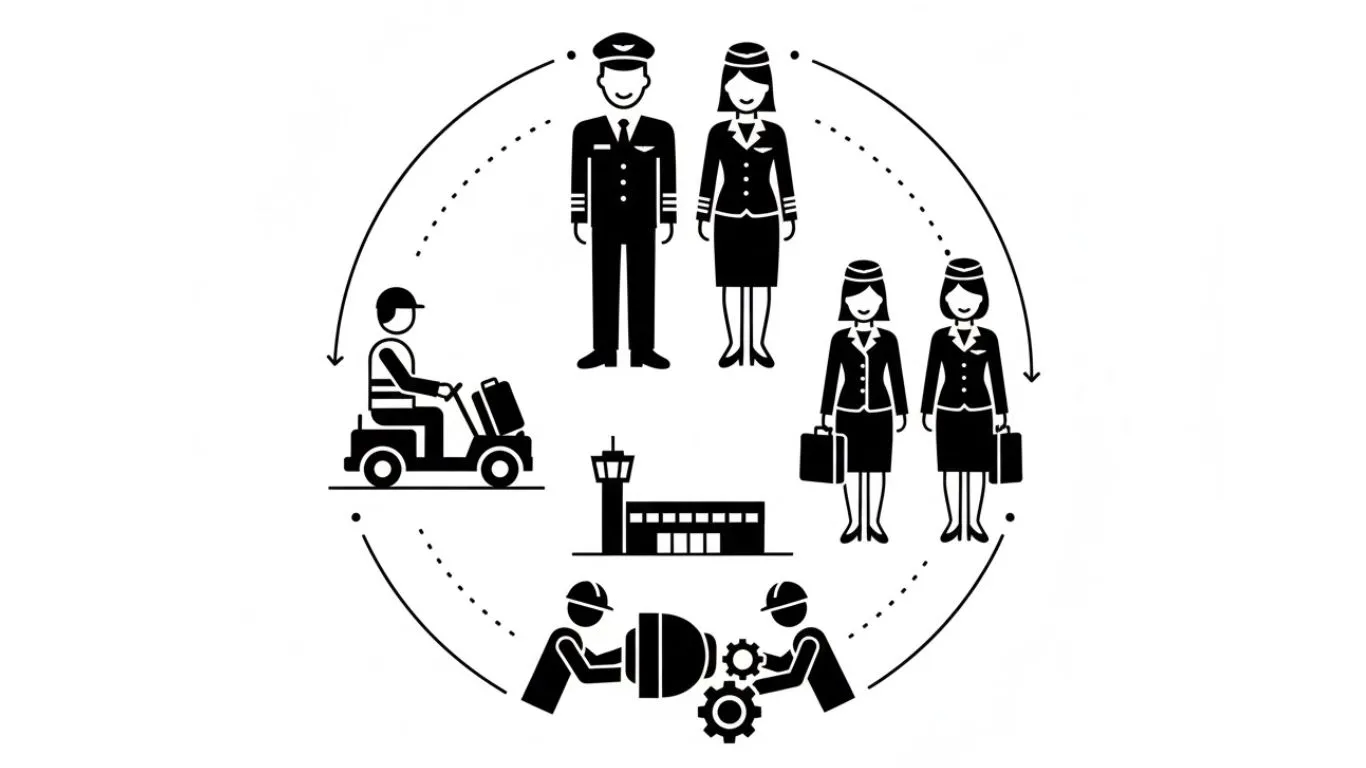
The growth of the aviation industry is opening diverse career paths beyond just pilots and cabin crew. Some of the most in-demand roles include:
- Pilots: Graduates of structured commercial pilot training and pilot training programs can progress from trainee first officers to captains with attractive salary packages.
- Cabin Crew: A well-designed flight attendant course prepares learners in safety procedures, customer service, and inflight hospitality for domestic and international airlines.
- Ground and Airport Operations: Students completing an airport management course can work in terminal operations, passenger services, ground handling, and airline coordination.
- Maintenance & Engineering: Aircraft mechanic training and aircraft maintenance engineering programs equip learners to work on airframes, engines, and avionics in MRO organizations and airline engineering departments.
Many universities now offer an aviation bachelor degree or aviation management degree that blends technical understanding with management skills, creating job-ready graduates for supervisory and managerial roles.
Role of Aviation Education and Training
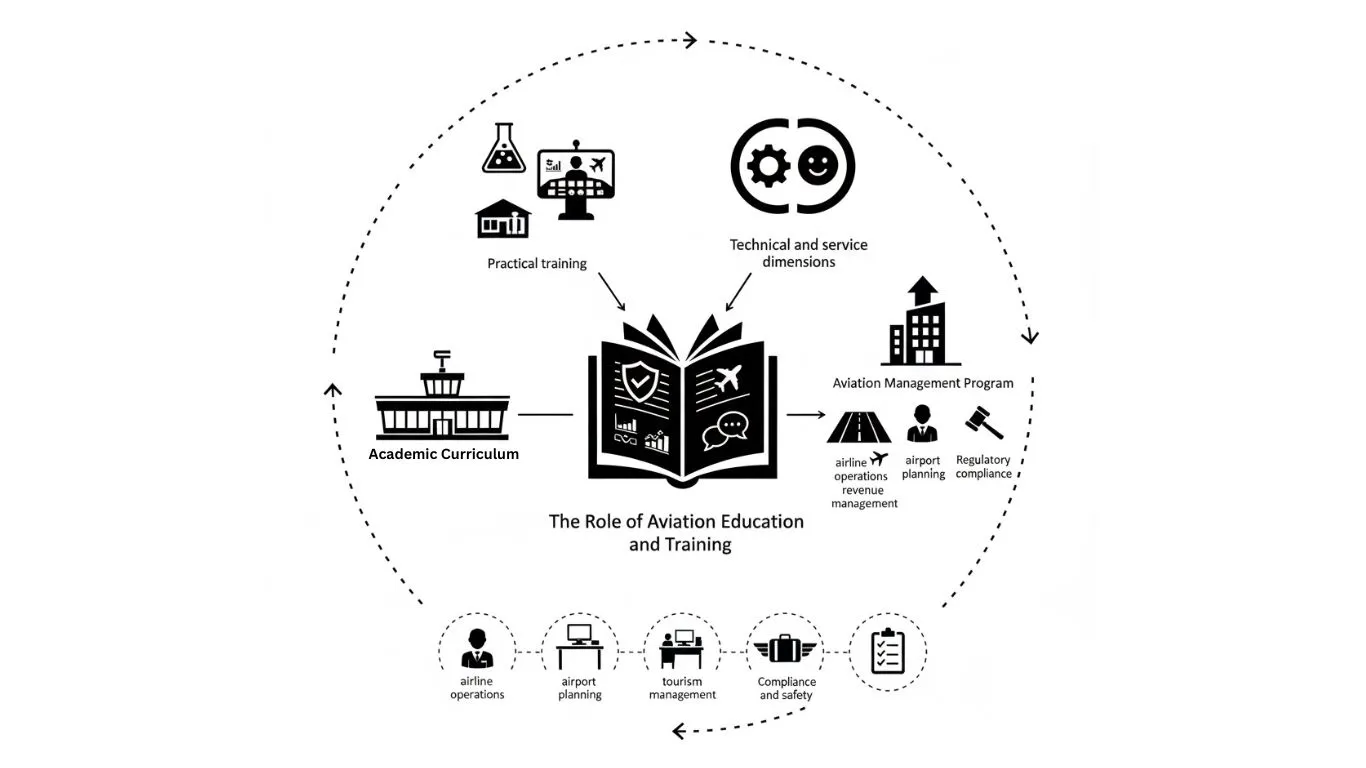
As the sector grows, the quality and structure of aviation education have become critical. The best aviation colleges focus on:
- Industry-aligned curriculum that covers safety, regulations, operations, and soft skills.
- Practical training through labs, simulators, and airport/airline internships.
- Exposure to both technical and service dimensions of aviation.
A modern aviation management program goes beyond theory to teach airline operations, revenue management, airport planning, customer experience, and regulatory compliance. Similarly, aviation management courses at the vocational and undergraduate level help learners build careers in areas like:
- Airport operations and terminal management.
- Airline ground services and customer relations.
- Route planning and scheduling.
- Aviation logistics and cargo handling.
Importance of Vocational and Skill-Based Aviation Programs
While traditional degrees are valuable, the rapid growth of aviation in India has also highlighted the importance of vocational, skill-focused pathways. Shorter, intensive programs can prepare students for specific roles faster, such as:
- Cabin crew roles through a focused flight attendant course that covers grooming, communication, safety drills, and first aid.
- Ground operations through practical airport management course modules on check‑in, boarding, baggage operations, and customer service.
- Technical maintenance roles through hands-on aircraft mechanic training linked to established MROs.
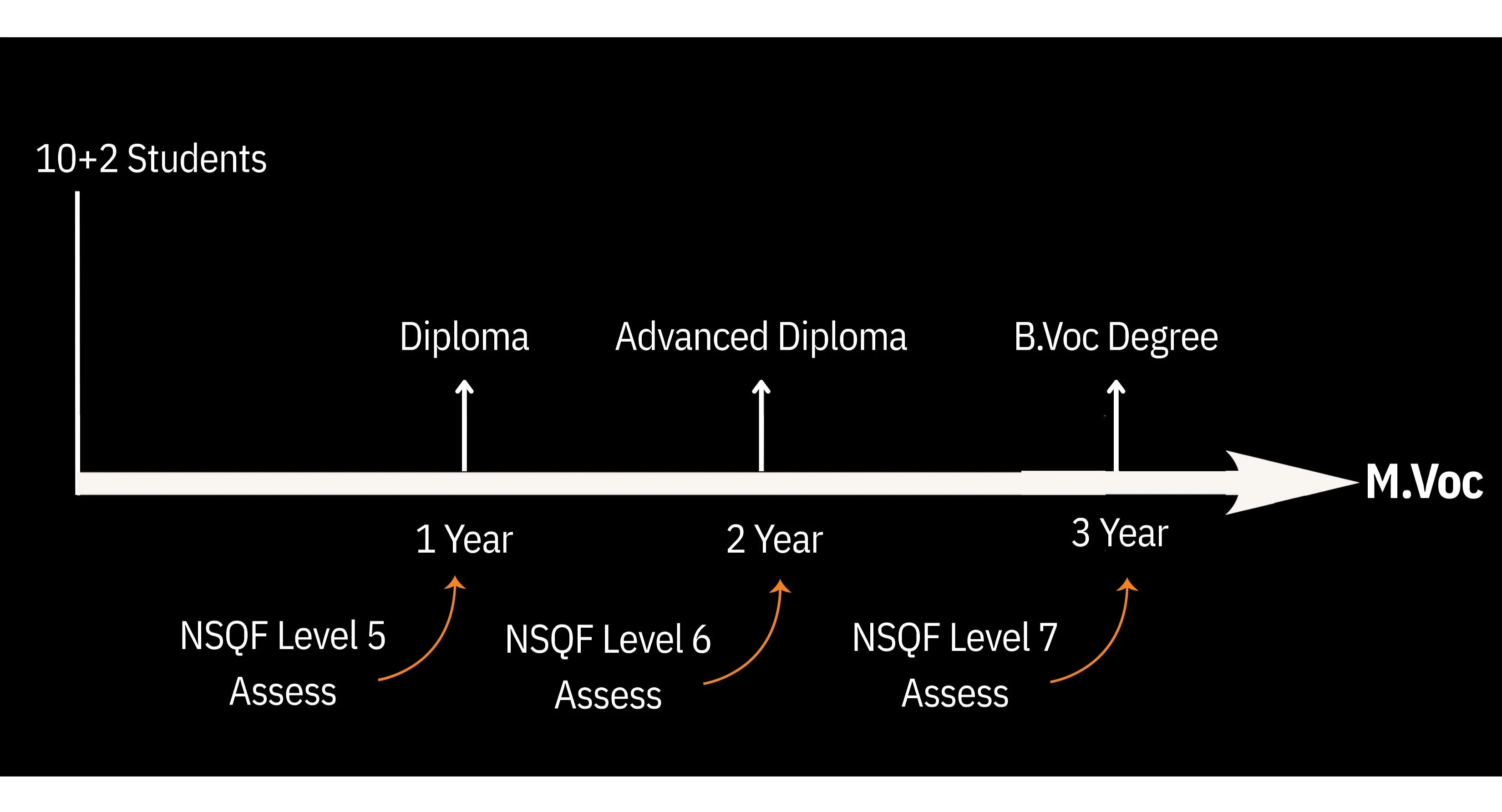
These programs can also be stacked into longer qualifications like an aviation bachelor degree or aviation management degree, allowing students to start working early and upgrade qualifications over time. For a vocational-focused university, structuring aviation learning in progressive tiers—certificate, diploma, and degree—creates multiple entry and exit points for diverse learners.
How Sikkim Alpine University Can Align with Aviation Growth
With aviation recognized as a strategic growth sector in India, there is strong potential for universities to build specialized vocational pathways supporting this ecosystem. For Sikkim Alpine University's vocational wing, this could include:
- Entry-level aviation course modules introducing airline and airport operations.
- Focused aviation management courses tailored for roles in airport operations, airline customer service, and ground handling.
- Pathways that allow students to begin with certificate-level training and later progress into an aviation management degree or broader aviation bachelor degree.
- Collaboration with airlines, airports, and MROs to enable internships, industry projects, and work-based learning.
By designing skill-centric programs in aviation management, airport management course, flight attendant course, and aircraft maintenance engineering, the university can help learners tap into one of India's most promising employment sectors. As the country continues to expand airports, routes, and fleets, graduates from such aviation-focused vocational programs will be well positioned to build stable and rewarding careers in the aviation industry.