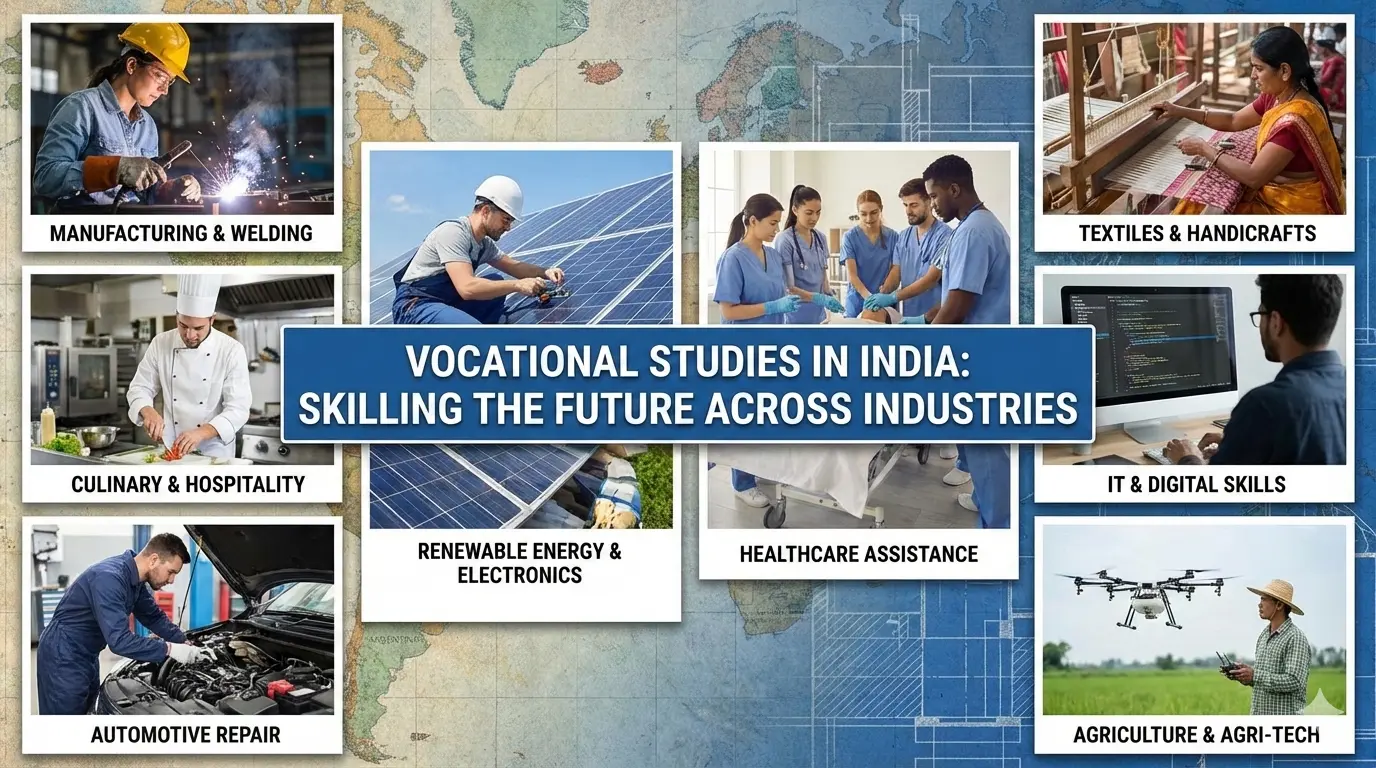
How Do Vocational Courses Improve Job Prospects in Today's Market?
In today's dynamic job market, where employers prioritize practical skills over theoretical knowledge, vocational courses stand out as a powerful pathway to career success. These programs, often referred to as vocational education and training (VET) initiatives, equip learners with hands-on expertise tailored to industry demands, boosting employability significantly. From vocational courses after 12th to advanced degrees in vocational education and training, they bridge the gap between academia and real-world jobs, making graduates more competitive.
Understanding Vocational Courses
Vocational courses focus on skill development rather than rote learning, offering certifications like Diploma of Vocational Education and Training, intermediate vocational course, or B.Vocational course (B.Voc). A vocational courses list typically includes fields such as healthcare, IT, hospitality, automotive repair, and digital marketing. For instance, 2 years vocational courses list options like plumbing, welding, or graphic design provide quick entry into high-demand trades. Institutions like Sikkim Alpine University deliver vocational education and training courses under UGC guidelines, ensuring nationally recognized credentials that employers value.
These programs span various formats: short-term vocational training courses, vocational education courses, or longer vocational counselling courses for career advisors. Unlike traditional degrees, they emphasize apprenticeships, workshops, and simulations, aligning directly with job roles. In India, vocational courses after 12th have surged in popularity, with over 500 skill-based programs available through platforms like Skill India, catering to the 80% youth unemployment challenge by fostering self-employment.
Key Advantages for Job Prospects
Vocational training slashes unemployment risks by 20-30%, as per global studies, because it delivers industry-specific competencies. Graduates of vocational education and training programs often secure jobs faster—within 3-6 months—compared to general degree holders who may take a year or more. Here's why:
- Industry-Relevant Skills: Courses mirror workplace needs. A degree in vocational education and training might cover advanced robotics for manufacturing, while a vocational training course in nursing teaches clinical procedures hands-on.
- Higher Employability Rates: In sectors like renewable energy and logistics, VET alumni fill 70% of vacancies. Sikkim Alpine University's B.Voc. and M.Voc. pathways exemplify this, with certifications leading to diplomas, advanced diplomas, or full degrees.
- Cost-Effectiveness and Flexibility: At 20-50% less than university degrees, options like intermediate vocational course allow part-time study, ideal for working professionals.
Real-World Impact in Today's Market
The gig economy and automation have reshaped hiring, favoring skilled workers. Post-pandemic, India's job market craves vocational education courses in e-commerce logistics, cybersecurity, and healthcare aides—fields where VET excels. A vocational courses list from bodies like NSDC includes EV technician training, projected to create 5 million jobs by 2030.
For freshers, vocational courses after 12th like beauty therapy or event management offer immediate income via freelancing. Mid-career switchers benefit from vocational counselling courses, gaining credentials to pivot into HR consulting. Globally, countries like Germany (dual VET system) boast 5% youth unemployment, proving the model. In India, Sikkim Alpine University's School of Vocational Studies emphasizes "employability," with pedagogy ensuring expertise in niches like tourism or agri-business.
Success stories abound: A B.Vocational course graduate in hospitality lands a 5-star hotel role at ₹4-6 LPA starting salary, outpacing many BA holders. Data from LinkedIn shows VET-certified profiles receive 40% more recruiter views.
Choosing the Right Vocational Path
Start with self-assessment: Match interests to a vocational courses list via tools like NSQF frameworks. Prioritize UGC-approved programs like those at Sikkim Alpine University for credibility. Explore Diploma of Vocational Education and Training for foundational skills or vocational education and training courses for specialization.
Financial aid via PMKVY scholarships covers up to 100% fees. Online platforms like Coursera now offer hybrid vocational training course certifications, blending flexibility with rigor.
Future-Proof Your Career
As Industry 4.0 accelerates, vocational courses future-proof careers against AI disruptions—human skills like problem-solving remain irreplaceable. Enroll in a degree in vocational education and training or short intermediate vocational course today to ride the wave. Sikkim Alpine University's offerings, from diplomas to M.Voc., position learners for thriving roles in a skills-first economy.